

创建手动结算期
For Procore Customers in the United States
 When your company applies the 'Owners English' or 'Specialty Contractors English' point-of-view dictionary, you'll see different tool names and term changes in the user interface. Learn how to apply the dictionary options.
- To learn the differences: Show/Hide
目标
以 发票 管理员 的身份,为项目的 分包商发票 手动创建新的结算期。
背景
需要考虑的事项
- 所需用户权限
-
- 当你创建新的结算期时,Procore 会自动设置:
- 新结算期的状态为未完成。
- 上一个结算期的状态为已关闭。
- 在任何给定时间,只能有一(1)个结算期处于未完成状态。
- 你只能在项目级别发票工具中创建结算期。
- 你无法在公司级别创建或管理结算期。
- 这些发票管理功能依赖于结算期:
- 要创建新发票, Procore项目必须有一(1)个未完成的结算期。 请参阅创建分包商发票。
- 要编制分包商发票备份,请将"结算期"表中所有以前开具发票的结算期处于关闭状态。使用开发票工具编制分包商发票备份。将结算期链接到发票后,绝不能删除该结算期。请参阅编辑结算期。
- 要使用来自其他 Procore 工具的数据自动填写业主发票上的金额,受支持财务项的结算期和日期必须与发票上的结算期日期相匹配。 请参阅Procore 如何自动完成上游 发票上的金额?
- 当你创建新的结算期时,Procore 会自动设置:
先决条件
步骤
- 导航到项目级别发票工具。
- 可选:点击结算期标签页。
- 点击创建结算期。
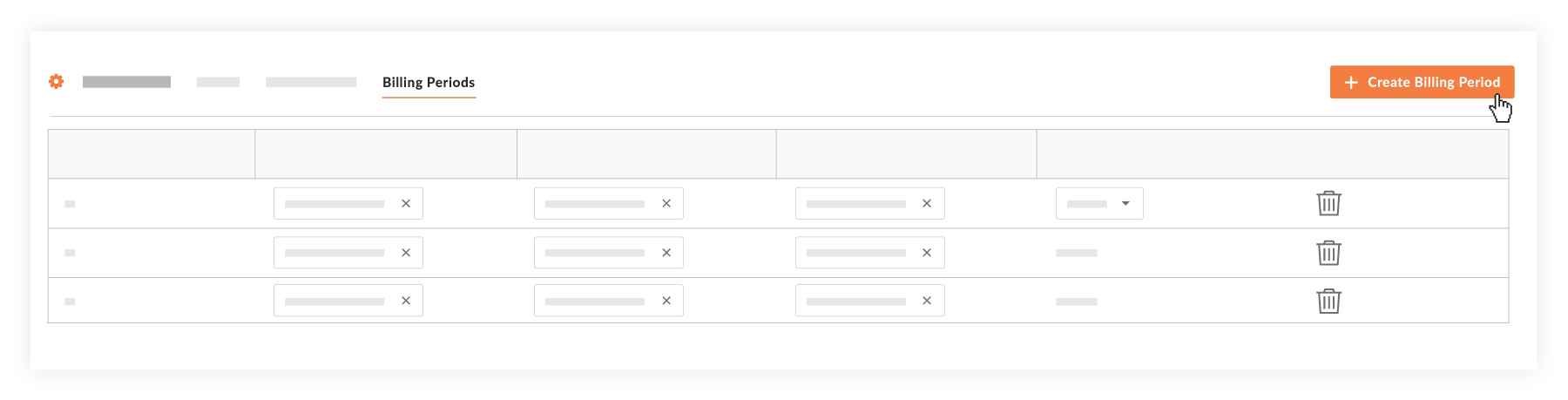
- 在"设置结算期"提示中,可以使用手动标签页 默认活动。
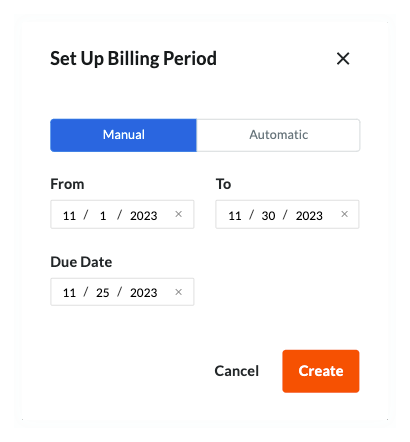
- 在手动标签页中,接受默认结算期日期或选择其他日期以:
- 从。设置新结算期的开始 日期。
注意
在此结算期为未完成时创建发票,"开始"日期会自动填充新发票上的"期间开始"字段。 - 至。设置新结算期的结束日期。
注意
在此结算期为未完成时创建发票时,"截止"日期会自动填充新发票上的"期间结束"字段。 - 截止日期。 设置新结算期内新发票提交的截止日期。
注意
- 在此结算期为"未完成"的情况下创建发票时,"截止日期"字段中的日期会填充新发票上的"期间开始"字段。
- 未完成结算期的"截止日期"过去后,请注意:
- 发票联系人无法再创建或提交发票。 此外,如果发票 管理员将分包商发票置于草稿或修改并重新提交状态,则发票联系人只能编辑分包商发票。
- 只有发票管理员保留创建分包商发票的能力。
- 从。设置新结算期的开始 日期。
- 点击创建。
Procore 创建新的结算期并将其状态设置为打开。Procore 还会自动将上一个结算期设置为已关闭。
后续步骤
If you would like to learn more about Procore's invoice management software and how it can help your business, please visit our construction invoice management software product page  .
.
.